
Hire an admin or automate the admin?

Hire when the work needs judgement, relationships or a phone answered. Automate when the same steps repeat every week, follow rules someone can write down, and grow with every new customer. Most businesses need both, and the first job is splitting the admin into those two piles.

Hire for judgement. Automate the work that grows with every customer.

The admin that grows with you

Each new customer brings the same block of admin.

The usual signal is a backlog. Invoices go out late, claims sit unchecked, and the person who runs the business spends evenings rekeying data between systems. Hiring an admin is the obvious fix, and sometimes it is the right one. The trouble is that a lot of admin scales with volume, so every new customer adds the same fixed block of work, and the hire you make this year becomes two hires the year after.

The better question is which parts of the admin need a person at all. Answering phones, chasing a difficult debtor and calming an upset customer need someone who can read the room. Matching an invoice to a purchase order, checking a claim against a budget and copying a booking into the accounts system do not.

Which pile does the work go in?

Sort the admin by the shape of the task, not by the job title. Most roles hold some of each.

Hire: it needs judgement

Exceptions, disputes and calls where the answer depends on who is asking. Software can route these to the right person, but it should not be the one deciding.

Hire: it is a relationship

Customers, suppliers and staff who want a name they know. If the value of the task is the conversation, a person does it better and always will.

Hire: it changes every week

Work with no stable steps is hard to automate and expensive to maintain. Let a person own it until the pattern settles, then look again.

Automate: it repeats

The same steps dozens or hundreds of times a week. Volume is what turns a few saved minutes into a saved role, and it is the work people least want to do.

Automate: it moves data

Reading one system and typing into another. Where the systems can be connected, that rekeying should not exist, and nobody should be hired to do it.

Automate: it grows with volume

If doubling your customers doubles the task, it caps your growth. Automating it means the next customer costs close to nothing in admin.

Offshore or automate?

An offshore assistant costs a fraction of a local hire, so it looks like the cheap version of hiring. For a short spike, or work that needs a person but not a local one, it can be. For admin that repeats every week, it moves the cost offshore rather than removing it. You still pay for every hour, you still brief and check the work, and each new customer still adds the same block of admin, just at a lower rate.

There are costs the hourly rate leaves out. Someone in your team spends time managing the work. A two to three hour time difference slows anything that needs a quick answer. Customer and financial data now sits with a person outside the business, which matters if you handle health, NDIS or financial records.

The test is the same as for a local hire. If the task needs judgement or a relationship, a person should do it, onshore or off. If it follows rules and grows with volume, automating it once costs less than paying someone to repeat it every year. Many businesses use an offshore assistant as a bridge while the repetitive work is automated, then keep them on the exceptions.

TP Records manages NDIS plans, and every participant carried the same fixed block of admin: claims checked against budgets, invoices matched to support categories, records kept for audit. That work sat with the founder, so growth was capped by her hours. We mapped every step from intake to payment, automated the costliest ones first, and built the rest into a platform shaped around plan management.

The business grew from a sole operator to a team of 13, and the platform paid for itself within the first year. The automation did not replace hiring. It meant the people TP Records hired could spend their time on participants instead of paperwork, and a new starter was useful in days because the process lived in the software.

Where this stops being hire vs automate

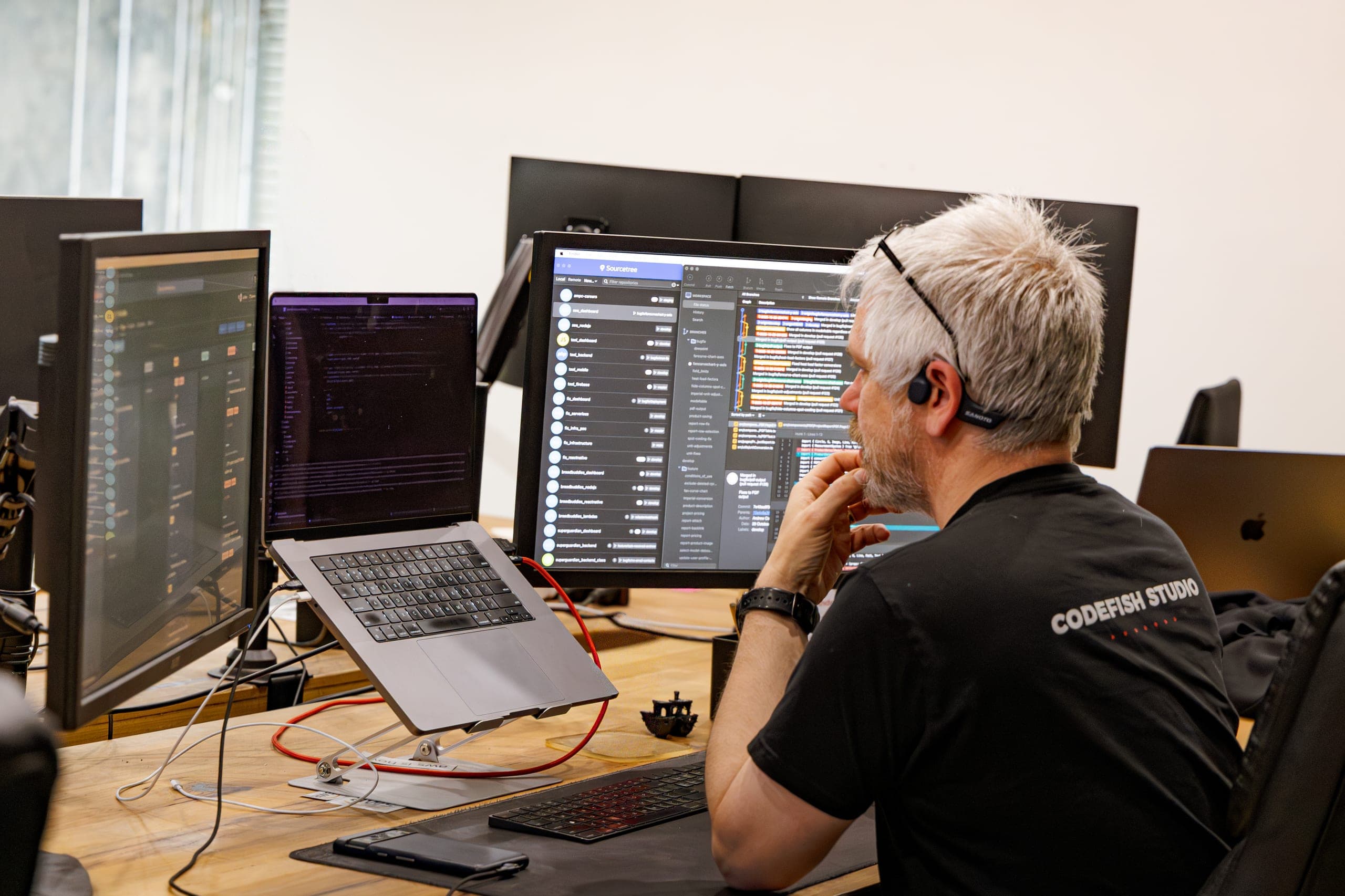
A CodeFish developer working across three monitors, reviewing code and version history

Already sure it should be automated?

Then the question moves on to how. Rules-based copying between systems with no API is the classic case for RPA, and our guide on when RPA pays off covers where it works and where it locks in a broken process. Inputs that vary, like an emailed order or a scanned docket, need software that can read, with a person checking the exceptions.

We are also clear about where automation should not go. Some decisions carry enough risk that a person should always make them. If nobody has written the process down, start there.

Hire or automate: questions we get asked

No, and a business case built on that usually disappoints. What changes is the work the hire does. Automation takes the repetitive volume, and the people you hire spend their time on exceptions, customers and the decisions software should not make. You hire later, and you hire for better work.

Count the hours, then sort by volume and rules. The best first candidate runs every day, follows steps someone can write down, and is low consequence if it stops for an afternoon. Watching the work as it happens gives better numbers than asking about it, because people under-report small repetitive tasks.

For a short spike, often yes. For admin that grows with every customer, a temp moves the cost rather than removing it, and you train a new person each time. It can be a sensible bridge while the repetitive work is being automated.

A Rapid Insight Workshop is $9,000 + GST over two sessions, with a roadmap about three weeks later. It shows which tasks to automate, which to leave with a person, and what each is costing now. Defined automation work is then quoted fixed price as Ignite or Amplify (typically from $100K).

What's this costing you per year?

The same admin, three ways to get it done. A salary is never the whole cost.

Local hire: $104K–$111K a year

Median full-time admin pay is about $75,000 (Jobs and Skills Australia 2025). Add super, payroll tax, workers compensation, leave and management time. An agency adds $11K–$17K to fill the role, and it repeats with every hire volume forces.

Offshore: $30K–$45K a year

An agency-placed assistant in the Philippines (VA Masters 2026). Add the time to brief and check the work, a two to three hour time difference, and care over who sees customer data. It still grows with every customer.

Automate: a one-off build

Built once, plus a small running cost. The next customer adds almost nothing. Keep a person for judgement and relationships. The workshop puts your own numbers against all three.

Ready to build something great?

Local partners, global standards – full service design and development.